Our Heritage
The Garr Family History
From the workshops of Bavaria to the ranches of Utah, the story of how the Garr family came to America and helped build the frontier.
The Name “Garr”
The Garr family name carries within it the echoes of an old trade. In its Germanic origins, the name derives from garre, meaning “cart”, an occupational name for a cartwright, a builder of the wagons and carts that were essential to daily life in medieval Europe. In its Irish and Scottish forms, Garr appears as a shortened version of McGarr.
Over the centuries, the spelling shifted with the times and the places: Gaar, Garr, and occasionally other variations. Many descendants of the original German immigrant line eventually settled on “Garr” as the standard American spelling, though the older “Gaar” persists in some branches.
Andreas Gaar & the Voyage to America
The American chapter of the Garr family begins in 1732, when Andreas Gaar, born in 1685 in Illenschwang, Bavaria, and his wife Eve Seidelmann made the momentous decision to leave their homeland and cross the Atlantic. They settled in Orange County, Virginia, joining the growing wave of German immigrants who were reshaping the colonial landscape.
Andreas brought with him the practical skills of his Bavarian upbringing and a determination to build something lasting in the New World. In Virginia, the Gaar family took root, farming the rich land, raising families, and slowly beginning the westward expansion that would define the next two centuries of Garr history.
The family lineage was meticulously documented by Dr. John Wesley Garr, whose research culminated in a comprehensive genealogy published in 1894, tracing the family back to Andreas in Bavaria.
Westward Across a Continent
From Virginia, the Garr family followed the arc of American expansion. Branches of the family moved into Georgia, Kentucky, and Indiana during the late 1700s and early 1800s, part of the great migration that pushed the frontier steadily westward. Each move brought new challenges: new land to clear, new communities to build, new lives to establish from scratch.
By the 1840s and 1850s, the most adventurous members of the family had pushed all the way to the Utah Territory, a landscape as different from Virginia’s gentle hills as one could imagine. Here, among the mountains and salt flats and vast open ranges, the Garr family would write some of its most remarkable chapters.
The Branches of the Family
Over nearly three centuries in America, the Garr family has grown into distinct branches, each with its own story and its own contributions.
Virginia/Midwest Branch
Virginia, Kentucky, Indiana
Descendants of Andreas Gaar who settled in Virginia and gradually spread into Kentucky and Indiana over the following century.
Key Figures
- Andreas Gaar (1685–?)
- Eve Seidelmann
- Dr. John Wesley Garr (genealogist)
Utah Branch
Antelope Island, Cache Valley, Utah
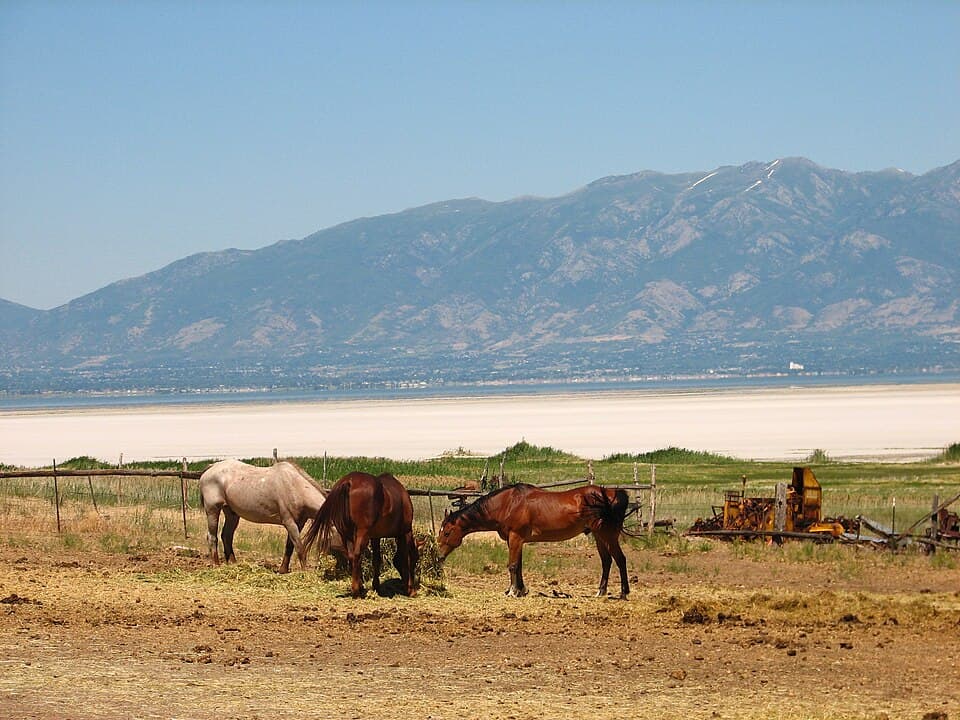
The pioneering western branch, beginning with Fielding Garr's ranch on Antelope Island and extending through the settlement of Cache Valley.
Key Figures
- Fielding Garr (rancher, d. 1855)
- Abel Weaver Garr (1824–1899)
- John Turner Garr
- William H. Garr
- Benjamin F. Garr
Religious/Southern Branch
Charlotte, North Carolina
A branch distinguished by Alfred Garr's prominent role in the Pentecostal movement, including the establishment of the Garr Auditorium in the 1930s.
Key Figures
- Alfred Garr (Pentecostal leader)
A Family of Many Trades
The Garr family has never been defined by a single occupation. Across the generations, the family has included farmers who worked the land from Virginia to Utah, ranchers who managed vast herds on islands and in mountain valleys, physicians who served their communities, and missionaries who carried their faith to new frontiers. What connects them all is a thread of practical determination, the same spirit that brought Andreas Gaar across the Atlantic in 1732.